Before-and-After Galleries, Clear CTAs, and Local Phone Numbers: Website Essentials for Trades
A contractor website does not need to win design awards. It needs to make the phone ring, bring in quote requests, and help the right customers feel comfortable reaching out.
That sounds obvious, but plenty of trade business websites still act like digital brochures. They show a logo, a stock photo of a smiling technician, a vague sentence about quality workmanship, and a contact page buried in the menu. Then the owner wonders why the site gets traffic but not leads.
For roofing, HVAC, plumbing, electrical, remodeling, landscaping, pool construction, fire protection, and similar home service businesses in the United States, a useful website usually comes down to a handful of basics done well. The details matter. A fast mobile experience matters. A local phone number matters. Clear service pages matter. Before-and-after galleries matter more than many owners realize, because homeowners want proof they are hiring someone who does this work every day, not someone who talks well about it.
The websites that consistently help trades businesses grow are rarely the fanciest. They are the clearest.
What homeowners are looking for when they land on your site
Most people visiting a contractor website are trying to answer a few practical questions very quickly.
Do you do the kind of work they need? Do you serve their area? Can they trust you in or around their home? Can they contact you right now without jumping through hoops?
If your site makes those answers hard to find, people leave. They do not usually send a polite note explaining what confused them. They hit back, open another contractor, and move on.
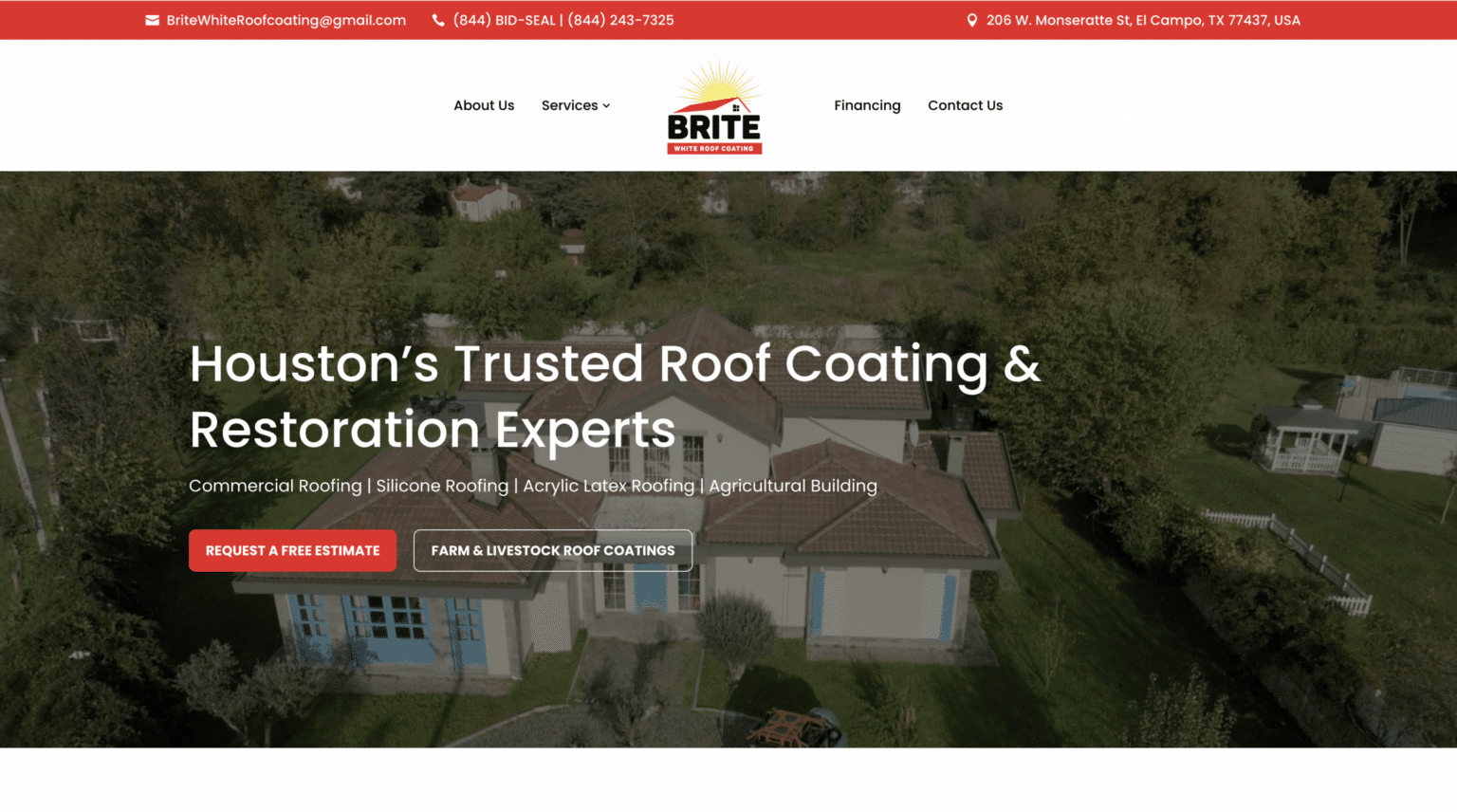
This is why the homepage matters so much. It should make a strong first impression and tell people what you do, where you do it, and what they should do next. If you install air conditioners in Houston, say that. If you repair roofs after hail in North Texas, say that. If you build pools in a specific set of counties, say that too. Do not hide the most important information under clever branding or broad slogans.
A lot of contractors try to sound bigger by being more general. In practice, the opposite usually works better. Specific businesses feel more trustworthy.
The three items people should see without hunting
There is no need to overcomplicate the top of a contractor website. Above the fold, a visitor should be able to see the essentials fast.
- what you do
- where you do it
- how to contact you now
- what action you want them to take
- one trust signal, such as reviews, project photos, or years in business if you can state it accurately
That fourth point is where many sites fail. A clear call to action is not pushy. It is helpful. If the next step is “Call now,” say that. If it is “Request a quote,” make that button visible. If you want people to text, that should be clear too.
Government small-business guidance has long treated calls to action as essential because visitors often leave if they are not guided toward a next step. For contractors, that next step should never be hard to spot.
Why local phone numbers still matter
A local phone number does more than route calls. It supports trust.
When someone is hiring a plumber, electrician, roofer, or remodeler, they often want to feel that the company is genuinely local or at least established in the area. Search platforms also encourage businesses to use local phone numbers where possible. That aligns with what customers expect to see.
A local number on your website, your Google Business Profile, and your main directory listings helps create consistency. It also cuts down on small trust leaks. If your site says one number, your profile shows another, and your truck wrap has a third, people notice. Even if they do not consciously think, “This seems off,” friction creeps in.
If you use call tracking, you have to be careful. Tracking can be useful, but not if it creates messy business information across the web. A common fix is to keep your main local number prominent and use tracking selectively where it will not create confusion.
This matters for lead generation and for local visibility. Search engines may use information from your official website as a source for business profile details and local results, so accuracy across your site is not just housekeeping. It affects how clearly your business appears online.
Before-and-after galleries do a job that words cannot
Homeowners hire with their eyes. That is true in remodeling, landscaping, roofing, painting, pool building, and even trades that feel less visual at first glance.
A bathroom remodel gallery tells a much stronger story than a paragraph about craftsmanship. A roofing page showing storm-damaged shingles next to a finished replacement creates immediate confidence. A landscaping project with bare yard photos followed by a finished install can help a prospect imagine what is possible on their own property.
Even in HVAC, plumbing, or electrical, project photos matter. They may not be dramatic every time, but clean mechanical rooms, organized panel upgrades, neatly installed mini splits, and professional fixture replacements still signal competence.
The mistake is treating galleries like an visit the site afterthought. Owners often upload a few random images with no captions, no location context, and no explanation of the work. That wastes an opportunity.
A useful gallery helps the visitor understand what problem existed, what work was done, and what kind of result your team delivered. It does not need to be elaborate. In many cases, a short caption is enough. “Full roof replacement after storm damage in Sugar Land.” “Kitchen remodel with new cabinetry and lighting in The Woodlands.” “Pool renovation with new coping and plaster in Katy.”
Those details pull double duty. They help users and they reinforce local relevance.
The contact experience should feel almost effortless
Many contractor websites ask for too much too soon. They present a long form with ten required fields, a dropdown maze, and an essay box labeled “Tell us about your project.” On desktop that is annoying. On a phone, it is often fatal.
A short quote form usually performs better because it respects urgency. Name, phone, service needed, ZIP code, maybe one short message field. That is enough to start a conversation. You can gather finer detail later.
Click-to-call matters for the same reason. A lot of local service buying happens from a phone in hand, often during a moment of need. If someone has a leaking water heater or an AC that stopped in the afternoon heat, they do not want to pinch, zoom, and search for your contact page. They want a visible phone number and a tappable button.
That mobile experience needs to be intentional. A desktop site squeezed onto a phone screen is not a mobile strategy. Buttons should be large enough to tap. Forms should be short. Text should be easy to read. Important information should appear early, not buried below oversized banners.
This is where many contractor websites quietly lose leads. The owner may test the site on a laptop in the office and think it looks fine. Meanwhile, most actual prospects are seeing it from a driveway, kitchen, or jobsite trailer.
Reviews belong on the website, not just on Google
A lot of owners assume reviews only matter inside Google. They matter there, but they also matter on your own site.
Consumers often rely on reviews and other trust signals when choosing home service providers. If someone clicks from search results to your website, that trust should continue. Selected review snippets, linked or embedded carefully, can reassure visitors that other homeowners had a good experience.
The key is restraint. Do not plaster every page with giant review carousels that slow the site down. Put a few well-placed testimonials near quote forms, on the homepage, and on key service pages. If possible, keep them relevant. A panel upgrade review belongs well on an electrical service page. A roof replacement review belongs on roofing pages.
And make sure your reviews are readable. Tiny text in a spinning slider that advances every three seconds helps no one.
Service pages are where a lot of SEO and conversion work gets done
A contractor who offers multiple services should not try to explain everything on one catch-all page. Clear service categories and dedicated service pages help visitors find what they need and help search engines understand your site.
An HVAC company, for example, might need separate pages for AC repair, AC installation, heating repair, furnace replacement, heat pumps, and maintenance. A plumbing company might need drain cleaning, water heater repair, repiping, sewer line services, and emergency plumbing. A remodeling business may need kitchen remodeling, bathroom remodeling, room additions, and whole-home renovations.
This is not about making the site bigger for its own sake. It is about matching how people search and how they think. Someone looking for panel upgrades is not looking for a general “electrical services” paragraph. Someone who wants a pool remodel has different concerns from someone starting a new pool build.
A good service page should explain the service plainly, show photos if available, give the visitor a reason to trust your company, and offer a clear next step. It should not read like a school essay written to chase keywords.
One of the most common website mistakes in the trades is thin service pages with almost no substance. A title, two sentences, and a stock image rarely help rankings or conversions. You do not need fluff, but you do need enough detail to be useful.
Service-area pages are worth doing, but only if they are real
Local SEO often gets discussed in abstract terms, but for contractors it usually starts with basic clarity. If you serve certain cities, counties, or neighborhoods, your website should say so in a way that is easy to understand.
A service-area page can help, and city-specific pages can also help when they are written honestly. The problem is when contractors publish dozens of nearly identical city pages with swapped place names and no real local context. Those pages tend to feel thin because they are thin.
A real service-area strategy starts with your actual footprint. If you actively work in Houston, Pearland, Sugar Land, Katy, and Cypress, those locations can support useful pages if each one contains meaningful information. Mention the services you provide there, the types of properties you typically work on if relevant, and local project imagery when available. Keep your contact details and hours accurate.
That accuracy matters beyond your website. Business profile information, website content, and local directory details should line up. If your website says one thing and your profile says another, you create confusion for both people and search platforms.
Fast load speed is not a technical luxury
Some owners still treat site speed as a nice bonus. It is more basic than that.
A slow website leaks leads. Visitors lose patience, especially on mobile connections. Heavy image files, cluttered plugins, oversized videos, and bloated page builders can all drag performance down. Contractor sites are particularly vulnerable because they often rely on large project photos and visual galleries, which are useful but need to be handled correctly.
The fix is usually not to remove all imagery. It is to use it with discipline. Resize photos before uploading them. Limit unnecessary motion effects. Avoid cramming every widget you can find onto the homepage. Keep the code and hosting setup healthy.
That is not glamorous work, but it affects whether people stay long enough to call.
Missed-call text-back and chat can recover leads that would otherwise disappear
For many home service businesses, the website is only half the lead-capture system. The handoff matters just as much.
If a prospect calls and no one answers, that lead is fragile. A missed-call text-back system can help by sending a prompt follow-up message that acknowledges the call and opens a text conversation. For businesses that spend real money on traffic, this can be a practical safety net.
Website chat can help too, especially after hours or when office staff are busy. Some businesses now use chat tools that qualify leads, answer simple questions, and collect contact details before a human steps in. That can be genuinely useful, but only if it is set up carefully.
Bad chat creates frustration. If the tool answers vaguely, traps users in canned responses, or pretends to be a person when it clearly is not, trust drops. Good chat sets expectations and makes it easy to reach a real human when needed.
The same judgment applies to automation in general. Convenience helps. Confusion hurts.
The mistakes I see most often on contractor sites
After looking at a lot of trade websites, the same issues tend to come up over and over. They are fixable, but they keep costing owners calls.
- The homepage is too vague, with no clear statement of services or service area.
- The phone number is hard to find, not local, or inconsistent across platforms.
- The quote form asks for too much information and discourages mobile users.
- There are few real project photos, and no before-and-after examples that prove the quality of work.
- Service pages are thin, generic, or merged into one catch-all page that answers nothing well.
There are other problems too. Stock photography where real job photos should be. No visible reviews. Slow pages. A site that looks fine on desktop but falls apart on a phone. No real calls to action except a “Contact Us” link hidden in the menu.
None of those are rare. The good news is that fixing even a few of them can materially improve lead flow.
DIY builders, freelancers, agencies, and managed subscriptions each fit a different stage
The right way to build a website depends on budget, urgency, internal capacity, and how involved the owner wants to be.
A DIY builder is the cheapest entry point in many cases. For a new business with almost no budget, that may be the only realistic option at first. The downside is time, quality control, and strategy. Most owners are not web designers, conversion specialists, or local SEO practitioners. A DIY site can work, but it often ends up looking generic and growing messy over time.
A freelancer can be a strong option when you find someone reliable who understands contractor marketing, not just visual design. The challenge is range. One person may be good at design but weak on copy, SEO, forms, speed, or ongoing support. Some freelancers are excellent. Some disappear after launch.
Agencies usually offer broader capability. They can handle design, content, technical setup, updates, and sometimes local search support. The trade-off is cost and, occasionally, process. Some agencies are attentive and practical. Others build slowly, communicate poorly, or upsell layers of services a trade business does not actually need.
Managed website subscriptions sit in the middle for some companies. Instead of paying a large upfront build fee, the business pays monthly for design, hosting, updates, security, and support. That can make sense for owners who want a professional site without managing the technical side themselves, especially if updates are included and response times are solid. It is not automatically better than the other options, but it can reduce friction.
One example in that category is Scalable Websites, a Houston, Texas company operated by Douloi Inc. That works with home service contractors on a monthly subscription model and includes hosting, security, unlimited updates, and a dedicated project manager. For some owners, that sort of arrangement is easier to budget and maintain than a big one-time build followed by scattered add-on costs. For others, owning a custom site outright through a freelancer or agency may feel like the better fit. The right answer depends on how hands-on you want to be and whether you value ongoing support enough to pay for it every month.
A contractor website should keep getting better after launch
Launching the site is the start of the work, not the end.
As your business grows, the website should evolve with it. Add new project photos. Improve service pages based on the questions customers ask most. Tighten calls to action if visitors are not converting. Update hours and contact details promptly. Keep your Google Business Profile aligned with what the website says. If you expand into nearby cities, build those pages carefully instead of dumping out thin copies.
This is another reason so many contractor websites underperform. They are built once and left alone for years. Services change, teams change, service areas shift, and the website slowly becomes less accurate. That hurts both trust and visibility.
The businesses that tend to win online are not always the biggest or the oldest. They are often the ones that keep their web presence current and practical. Their site loads fast. It works on a phone. It shows real work. It has a local number, clear service information, visible reviews, and an easy way to call or request help. It respects how customers actually shop for a contractor.
That is the standard worth aiming for. Not flashy, just credible and effective.
If you want a simple gut-check for your own site, open it on your phone and ask yourself what a rushed homeowner would see in the first ten seconds. If the answer is not immediately clear, that is probably where your next round of improvements should begin.
About Scalable Websites
Scalable Websites builds professionally designed, AI-powered websites for roofers, HVAC companies, plumbers, electricians, remodelers and other home service contractors, with hosting, security, unlimited updates and lead capture included in one monthly plan.
396 Mallorn Lane, Montgomery, TX 77316
Phone: (832) 979-2478
Website: scalablewebsites.com
About Scalable Websites
Scalable Websites builds professionally designed, AI-powered websites for roofers, HVAC companies, plumbers, electricians, remodelers and other home service contractors, with hosting, security, unlimited updates and lead capture included in one monthly plan.
Houston, TX · Serving contractors nationwide
Phone: (832) 979-2478
Website: scalablewebsites.com